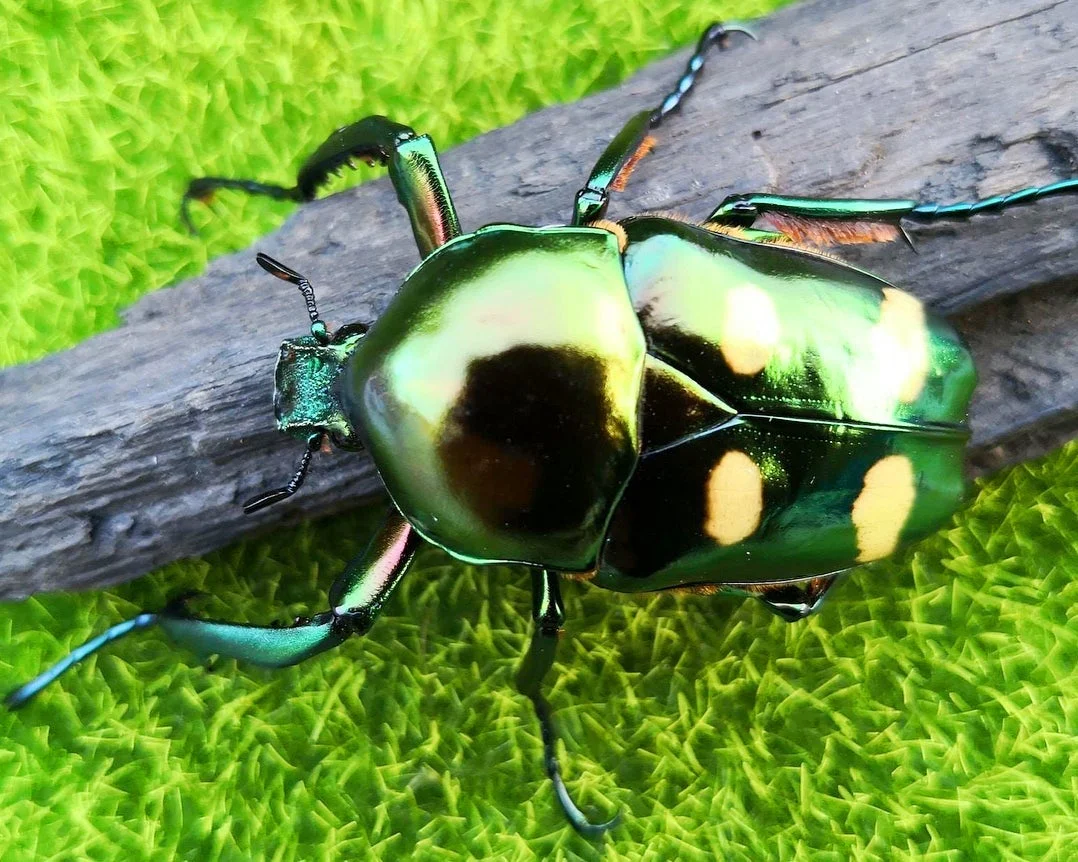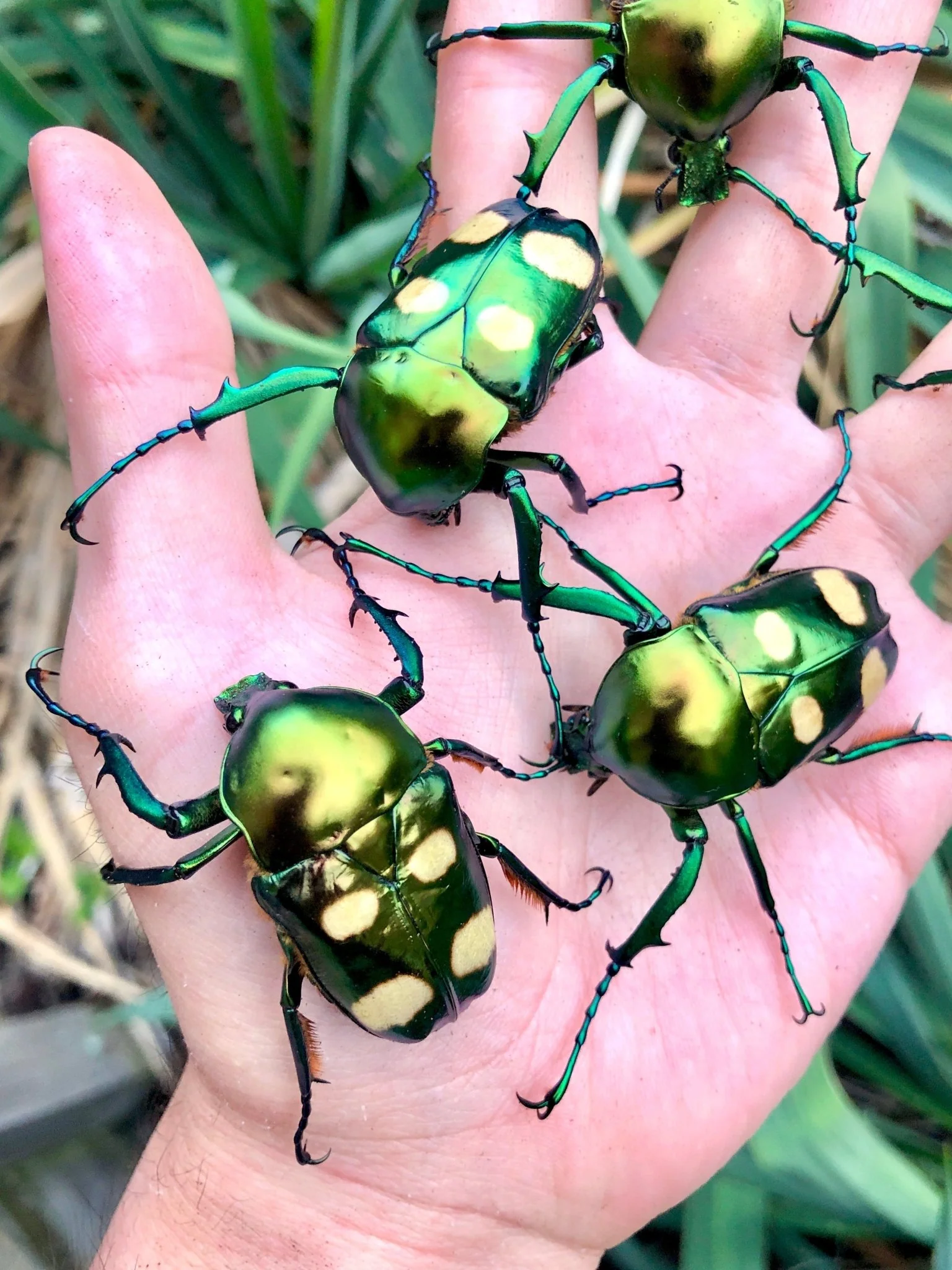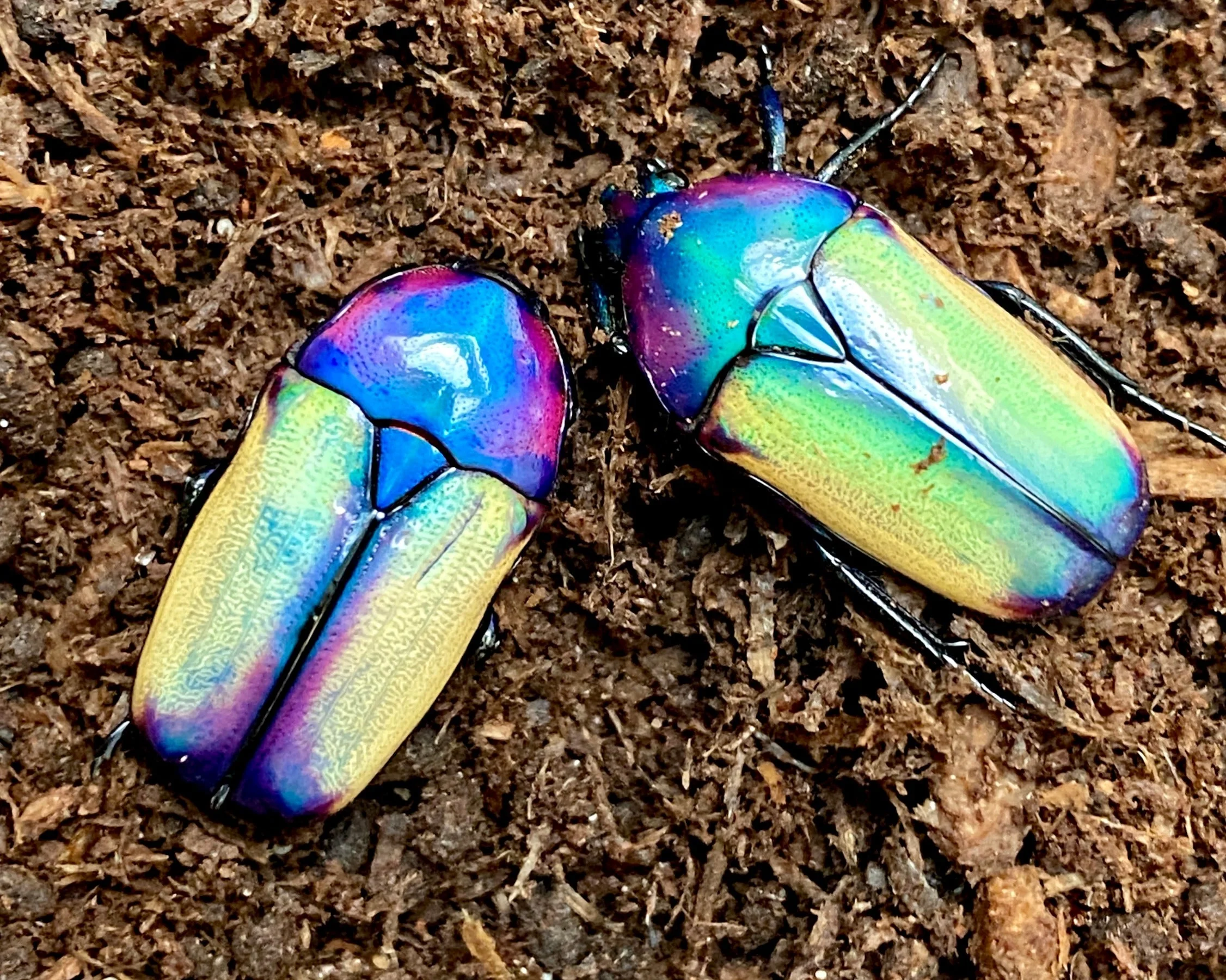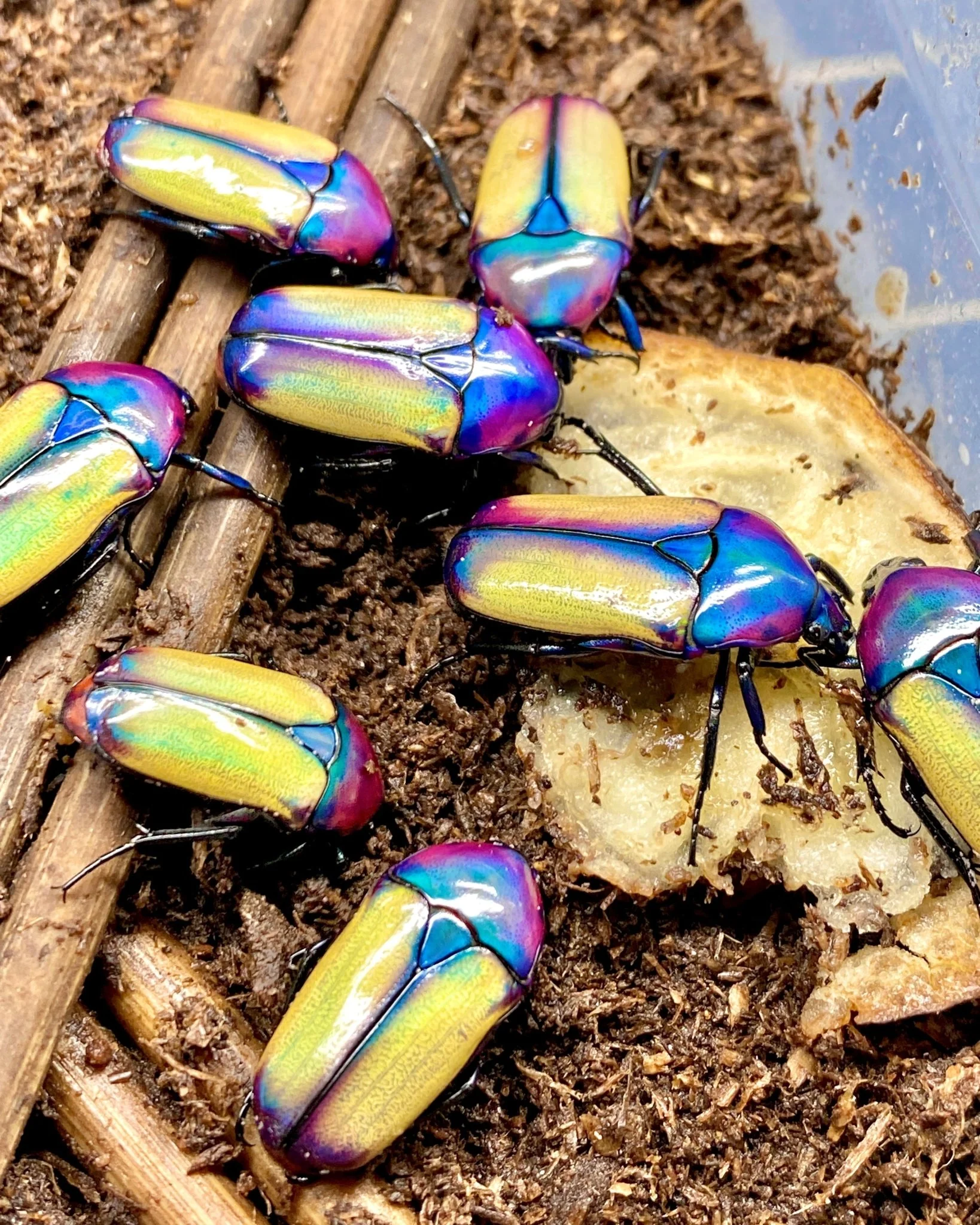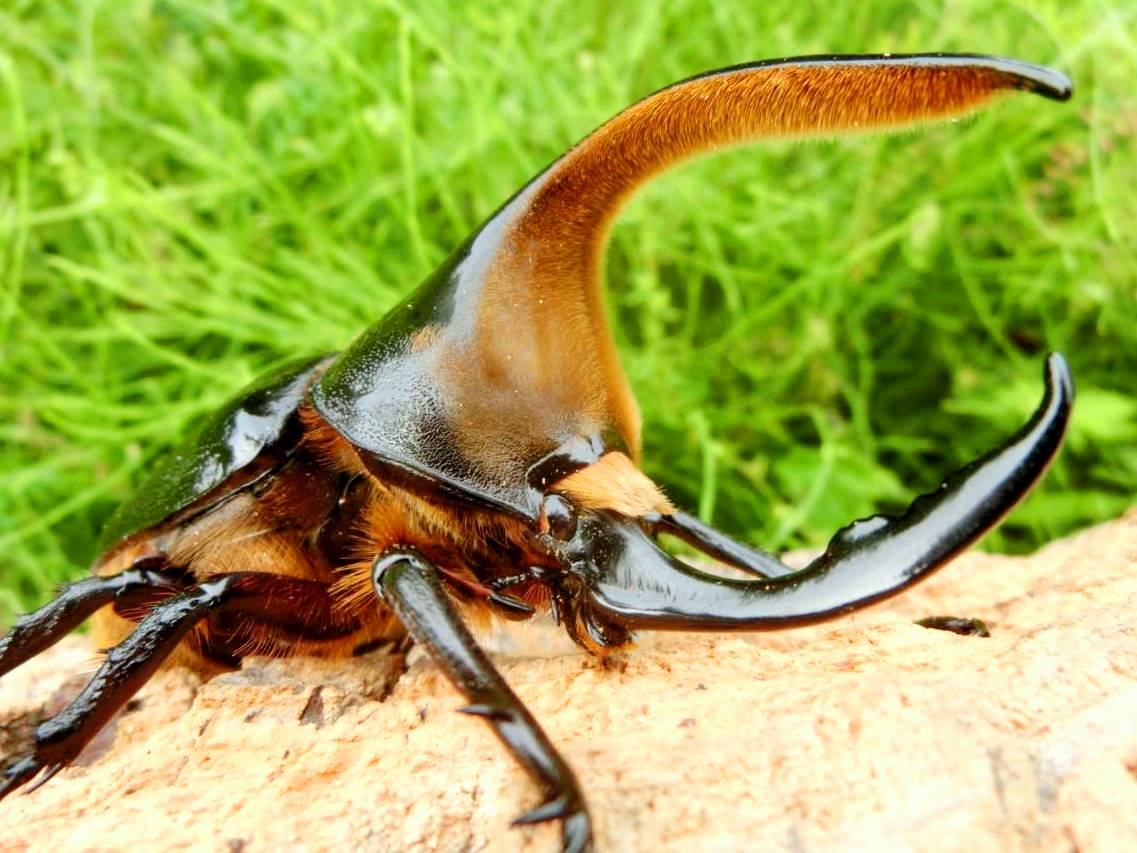
⨂ Larvae - Satan Rhino Beetle, (Dynastes satanas)
Common name - Satan Rhino Beetle
Scientific name - Dynastes satanas
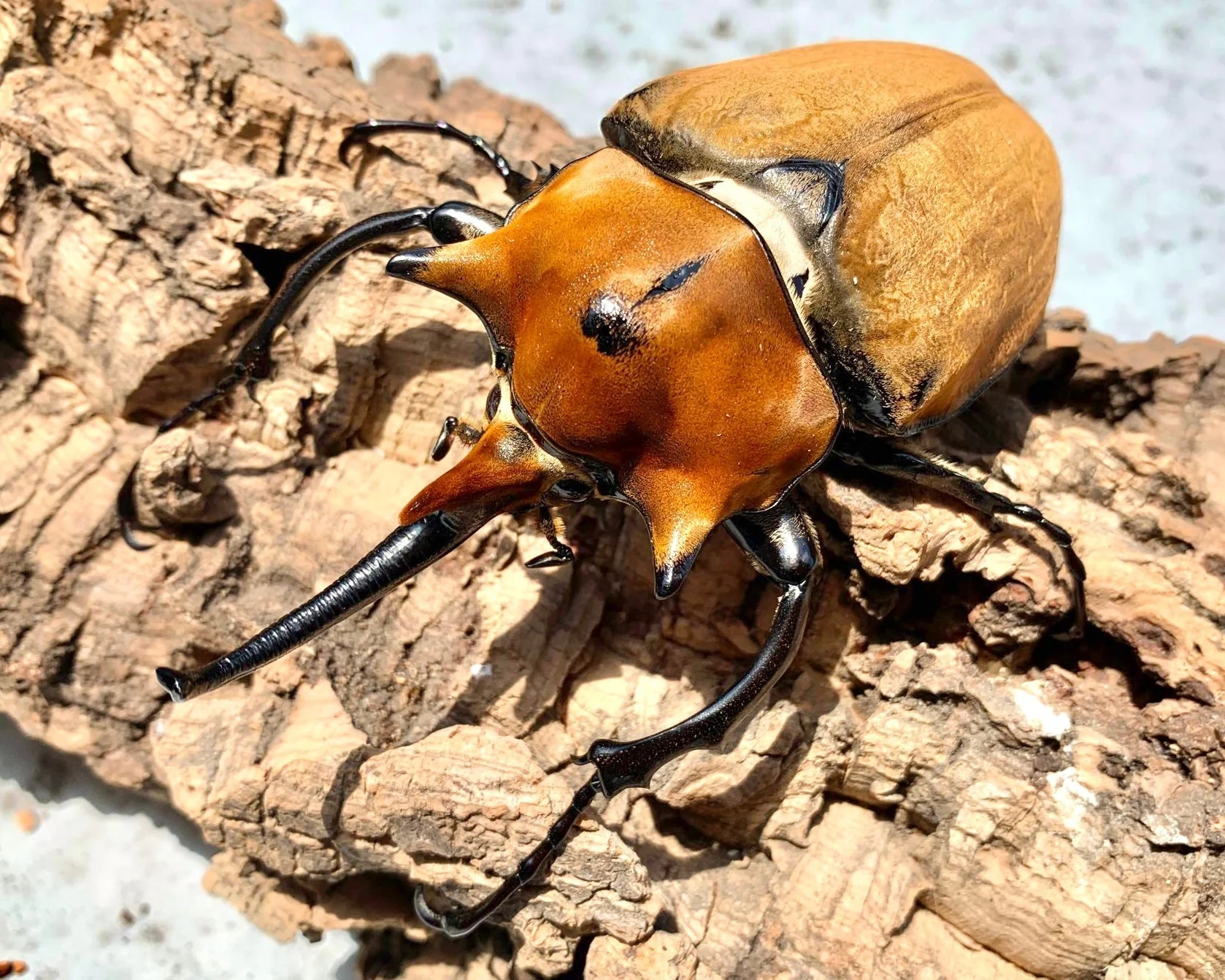
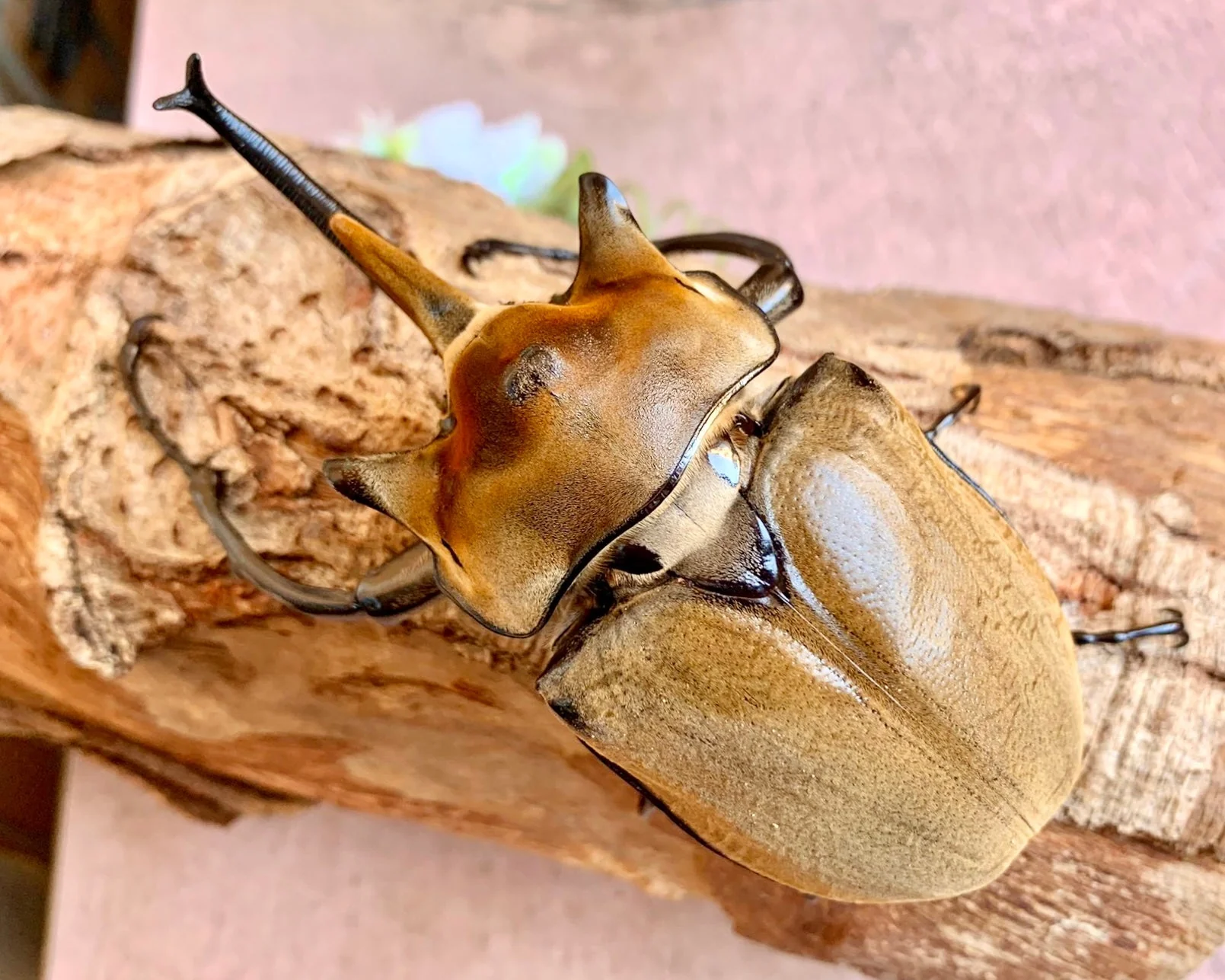
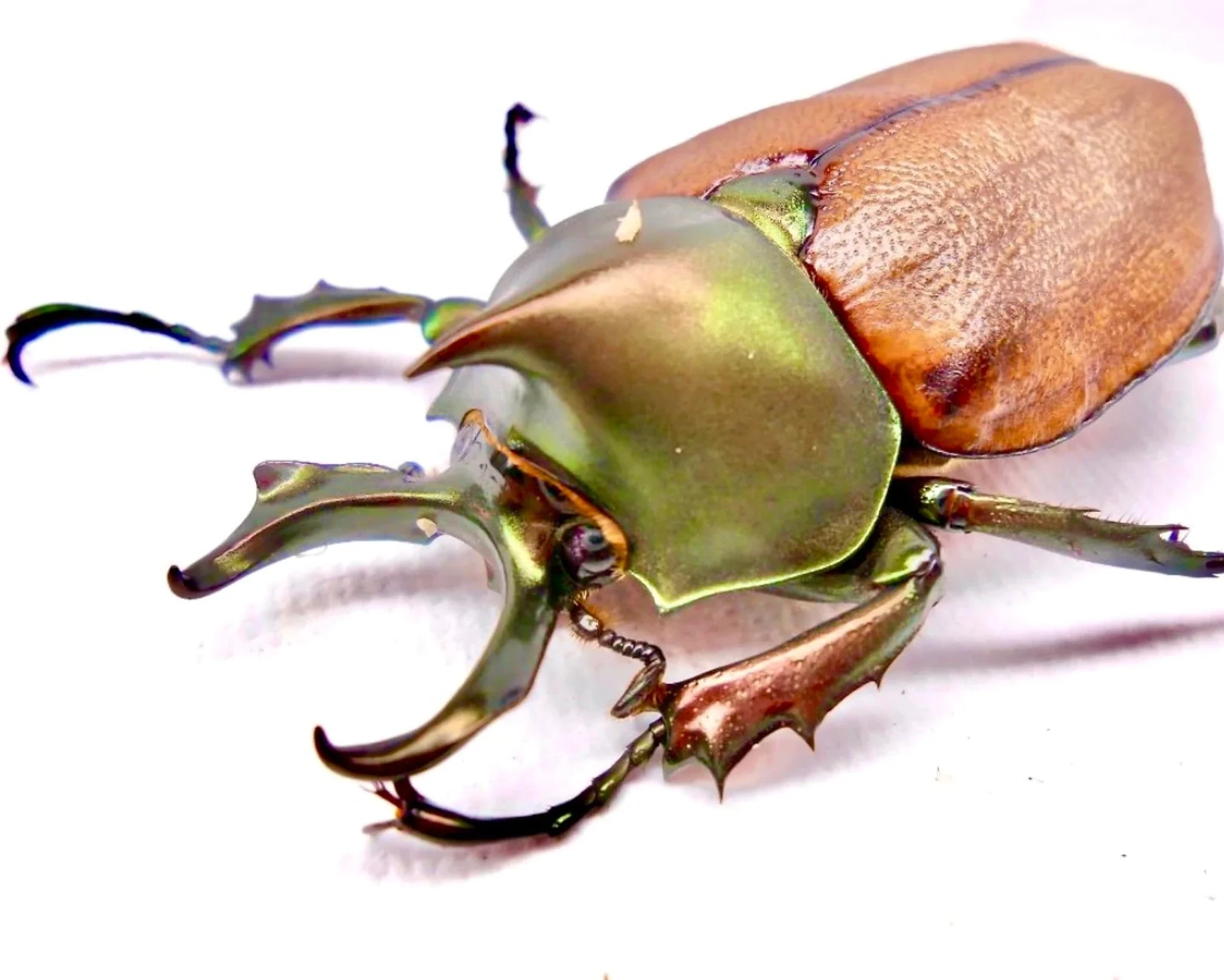
The listing is for 1x beetle larva, of a RARE rhino beetle species which are well known for their golden hairs that cover the entire frontal surface of the thorax and horns - a trait that is unique to this species.
These are CAPTIVE BRED, with this stock originating from Bolivia.
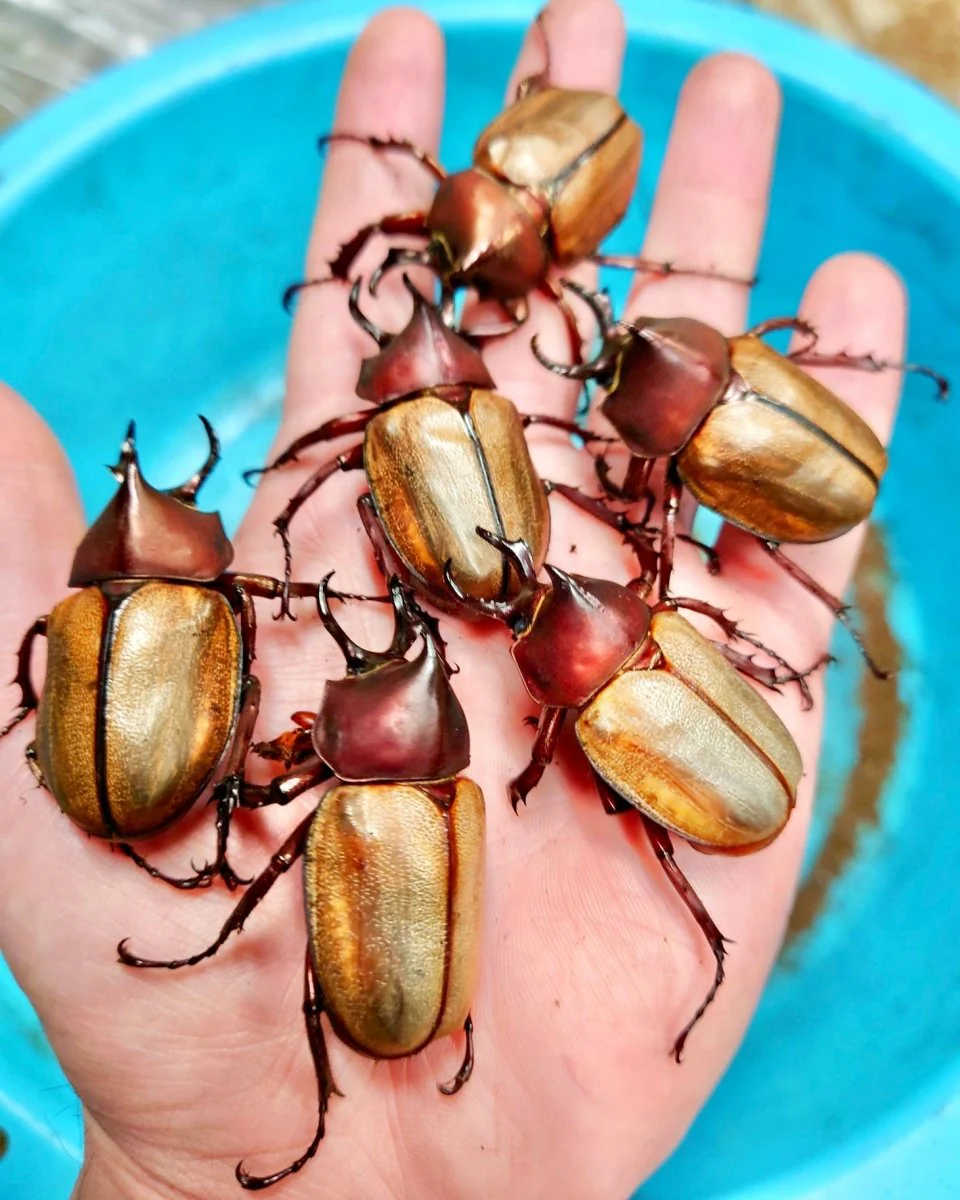
Like many members of the rhino/stag beetle families, the males of this species possess large horns/mandibles used in wrestling matches with rival males, while females lack these structures. The adult beetles feed on a variety of fruits such as banana, apple, pear, peach and watermelon. The larvae feed on decaying wood.
Beetle Larvae Care Sheet:
https://richardsinverts.com/care-sheet-beetle-larva
Shipping:
UK - Royal Mail Standard (NO live arrival guarantee)
UK - Royal Mail Special Delivery (live arrival guarantee)
DISPATCH DAY – Monday
*Orders are dispatched collectively once a week every Monday. The cut-off time is Saturday 11:59 pm UK local time (GMT/BST), and any orders placed after the cut-off will scheduled for dispatch the following Monday.*
TERMS & CONDITIONS
Orders are shipped at the buyer's own risk.
For the full T&Cs, please click on the link HERE.
*Disclaimer: These insects are non-poisonous and pose no harm when treated with gentle care, aligning with our commitment to the welfare of all living beings.*
Common name - Satan Rhino Beetle
Scientific name - Dynastes satanas
The listing is for 1x beetle larva, of a RARE rhino beetle species which are well known for their golden hairs that cover the entire frontal surface of the thorax and horns - a trait that is unique to this species.
These are CAPTIVE BRED, with this stock originating from Bolivia.
Like many members of the rhino/stag beetle families, the males of this species possess large horns/mandibles used in wrestling matches with rival males, while females lack these structures. The adult beetles feed on a variety of fruits such as banana, apple, pear, peach and watermelon. The larvae feed on decaying wood.
Beetle Larvae Care Sheet:
https://richardsinverts.com/care-sheet-beetle-larva
Shipping:
UK - Royal Mail Standard (NO live arrival guarantee)
UK - Royal Mail Special Delivery (live arrival guarantee)
DISPATCH DAY – Monday
*Orders are dispatched collectively once a week every Monday. The cut-off time is Saturday 11:59 pm UK local time (GMT/BST), and any orders placed after the cut-off will scheduled for dispatch the following Monday.*
TERMS & CONDITIONS
Orders are shipped at the buyer's own risk.
For the full T&Cs, please click on the link HERE.
*Disclaimer: These insects are non-poisonous and pose no harm when treated with gentle care, aligning with our commitment to the welfare of all living beings.*
Original: $24.51
-65%$24.51
$8.58Description
Common name - Satan Rhino Beetle
Scientific name - Dynastes satanas
The listing is for 1x beetle larva, of a RARE rhino beetle species which are well known for their golden hairs that cover the entire frontal surface of the thorax and horns - a trait that is unique to this species.
These are CAPTIVE BRED, with this stock originating from Bolivia.
Like many members of the rhino/stag beetle families, the males of this species possess large horns/mandibles used in wrestling matches with rival males, while females lack these structures. The adult beetles feed on a variety of fruits such as banana, apple, pear, peach and watermelon. The larvae feed on decaying wood.
Beetle Larvae Care Sheet:
https://richardsinverts.com/care-sheet-beetle-larva
Shipping:
UK - Royal Mail Standard (NO live arrival guarantee)
UK - Royal Mail Special Delivery (live arrival guarantee)
DISPATCH DAY – Monday
*Orders are dispatched collectively once a week every Monday. The cut-off time is Saturday 11:59 pm UK local time (GMT/BST), and any orders placed after the cut-off will scheduled for dispatch the following Monday.*
TERMS & CONDITIONS
Orders are shipped at the buyer's own risk.
For the full T&Cs, please click on the link HERE.
*Disclaimer: These insects are non-poisonous and pose no harm when treated with gentle care, aligning with our commitment to the welfare of all living beings.*